A Good Seed Still Cost Something to Plant, Even in Soil That Was Never Ready to Hold It
Dr. John Maurice, M.C., C.T.C., M.M.C. | Blog #113

When a strategy underperforms, leadership usually measures the cost in the obvious place: the budget spent on the initiative itself. The consulting fees. The software license. The training hours. What rarely gets measured, and what is often the larger number, is the cost of planting that strategy into a culture that was never prepared to hold it.
That cost is real, and it is measurable. It shows up in turnover, when people who could have stayed choose to leave instead. It shows up in discretionary effort, the difference between an employee doing exactly what’s required and an employee who brings their full capability to the work because they trust the environment enough to give it. It shows up in the speed of decisions, when every choice has to move through layers of caution built by past disappointment. And it shows up in the slow, quiet cost of good people doing average work because the ground beneath them never gave them a reason to do anything more.
But naming the cost isn’t actually the hardest part. The hardest part is this: we don’t usually resist the expensive fix because it’s expensive. We resist it because choosing it means finally admitting what staying the same has already been costing us. A familiar cost, even a large one, starts to feel safer than an unfamiliar solution, not because it actually is safer, but because we’ve already learned how to live with it. That’s the real reason so many organizations keep paying the same price, year after year, instead of addressing it once.

What Unturned Soil Actually Costs
There’s a specific number I think about more than any other from those three and a half years, and it isn’t a dollar figure. It’s the number of conversations I know I missed because I wasn’t positioned to be in the room for them yet.
I can point to at least two direct inquiries during that stretch, people who reached out interested in bringing me in to speak, who I couldn’t fully convert because my materials, my positioning, and my proof weren’t built to close at the level the opportunity required. I had the message. I had the content. I did not yet have the infrastructure underneath it that made a corporate buyer feel safe saying yes. Both times, I told myself it was a timing problem. It wasn’t. It was a soil problem. The seed, the message, was ready. The ground it needed to land in, positioning, proof, packaging, wasn’t.
Here’s what I didn’t want to admit at the time. The real reason I kept delaying the investment wasn’t that I couldn’t see the cost of staying the same. It’s that the cost of staying the same was familiar. I knew exactly what it felt like to keep working hard and falling short. I didn’t yet know what it would feel like to spend real money and still fail. The unfamiliar risk felt heavier than the familiar one, even though the familiar one was actually costing me more.
The ten thousand dollars I eventually invested wasn’t the actual cost of my transformation. It was the price of finally stopping a much larger, invisible cost, the cost of every conversation I would have kept missing had I kept mistaking effort for readiness.

Where the Cost Actually Shows Up
A company that experiences high turnover after a leadership transition is not usually paying for a hiring problem. It is paying, again and again, in recruiting costs, onboarding time, lost institutional knowledge, and reduced team output, for a trust problem that was never addressed at its root. Every replacement hire is a new seed planted in the same ground that produced the last departure.
A company where employees quietly withhold their best thinking in meetings is not paying for a communication problem. It is paying, in slower innovation and missed opportunities, for a psychological safety problem, the cost of a culture that taught people years ago that raising a hard truth was more dangerous than staying quiet.
A company that launches initiative after initiative with declining enthusiasm each time is not paying for a change-management problem. It is paying, in lower adoption and slower execution every single time, for a credibility problem, the accumulated cost of promises made and not kept.
These costs compound. They rarely appear as a single line in a budget. They appear as slightly lower performance, slightly slower execution, slightly higher attrition, quarter after quarter, until leadership finally asks why results have quietly plateaued despite continued investment in strategy.
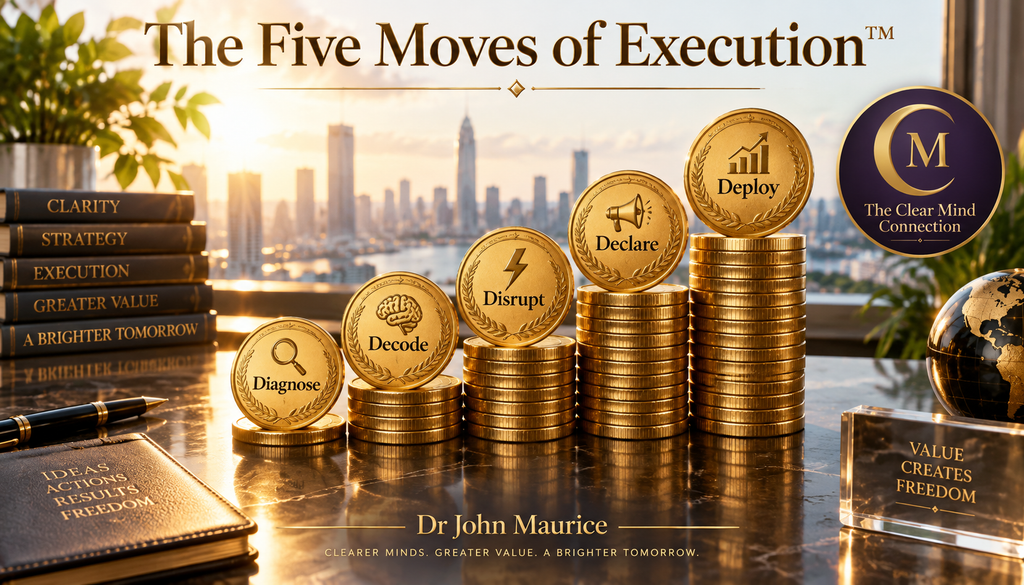
The Five Moves of Execution™
This is why the framework I teach begins with cost, not motivation.
Diagnose: Before assuming a performance problem, name the actual cost currently being paid. What is turnover costing in recruiting and lost productivity? What is hesitant, cautious execution costing in speed to market? Diagnosis starts with an honest accounting, not a motivational assumption.
Decode: This is where most leadership diagnosis stops too early. It’s not enough to trace a cost back to its source. The deeper question is what made the costly behavior rational in the first place. A team that hesitates to speak up isn’t behaving irrationally, somewhere along the way, this organization taught them that speaking up carried a real cost. A team that responds to every new initiative with quiet skepticism isn’t behaving irrationally either, they learned that skepticism from initiatives that were announced and then abandoned. Decode doesn’t ask “what’s wrong with our people.” It asks, “what did we reward, punish, ignore, or fail to protect that made this behavior the smart choice?”
Disrupt: Interrupt the pattern at its source, not at its symptom. Offering a retention bonus does not address a trust problem. It only delays the same cost showing up again later, usually at a higher price.
Declare: Name the new standard in terms specific enough to measure. Not “we value transparency,” but “leaders respond to hard questions within one business day, publicly, every time.” A standard that cannot be measured cannot be tied to a return.
Deploy: Put resources, incentives, and leadership behavior behind the new standard consistently enough that the old cost stops recurring. Deployment is the only move that actually changes the number.

Knowledge Creates Possibility. Investment Determines the Return.
Every organization already has access to knowledge about culture, trust, and execution. Books, consultants, and frameworks are not scarce. What is scarce is the willingness to invest in changing the actual conditions producing the cost, rather than continuing to pay for the cost quietly, year after year, while calling it something else.
That is the real choice in front of every leadership team, and it is the same choice I had to make in my own life. Continue paying, in effort and missed opportunity, for a problem misdiagnosed as a discipline issue. Or invest, deliberately, in the specific condition that was actually costing the most, even when that investment feels riskier than the familiar cost ever did.

Spanish Word of the Day
Costar (koh-STAHR)
Part of speech: Verb
Pronunciation and stress: The word is pronounced koh-STAHR. The stress falls on the second syllable, STAHR, so let that final sound carry weight when you say it.
English Meaning: To cost.
Simple Definition: Costar isn’t only about price tags. It’s about naming what something is actually taking from you, in money, in time, in people, whether or not anyone has written that number down yet.
Examples:
No cuesta lo mismo ignorar el problema que resolverlo.
It doesn’t cost the same to ignore the problem as it does to solve it.
Me costó tres años entender lo que realmente me estaba costando.
It cost me three years to understand what it was actually costing me.
Una cultura sin confianza cuesta más de lo que cualquier presupuesto refleja.
A culture without trust costs more than any budget reflects.
Reflection: The most expensive costs are rarely the ones written down anywhere. They’re the ones nobody has stopped long enough to name, because naming them requires admitting they exist.
Today’s Takeaway: If you haven’t named what the problem is taking from you, you haven’t actually calculated its cost yet.
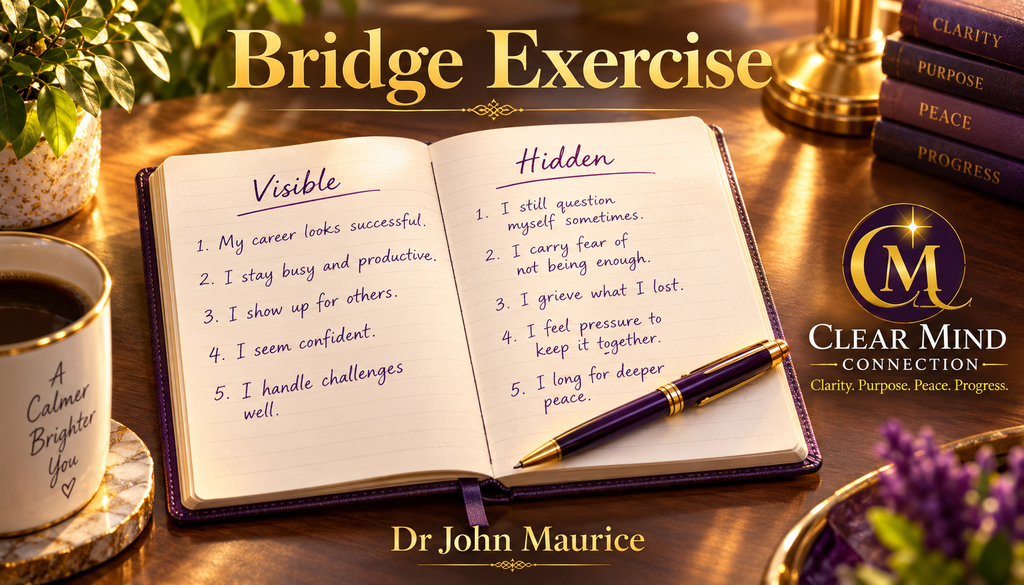
Bridge Exercise
Name the Visible Cost: Identify one recurring problem in your team or organization, turnover, slow decisions, low engagement, repeated project delays. Write down what it costs in the obvious terms: money spent, hours lost, people replaced.
Trace the Hidden Cost: Now ask what that problem has been costing beneath the surface, in trust, in discretionary effort, in the quality of work people are willing to bring when they don’t feel fully invested.
Identify What Made It Rational: Ask what this environment rewarded, punished, ignored, or failed to protect that made the costly behavior the smart choice at the time. Not what’s wrong with the people involved, what made their response reasonable given what they’d learned.
Price the Fix: Write down what it would actually take to address the root, not manage the symptom. Then compare that cost honestly against the cost of continuing to pay for the problem quietly, year after year.

Identity Affirmation
I do not confuse the visible cost for the real one. I look beneath the number that’s written down for the one that isn’t. I invest in conditions instead of continuing to pay for problems I’ve misdiagnosed as discipline issues. I know that avoiding an uncomfortable investment is never actually free, it’s a cost deferred, collecting interest. I don’t ask what’s wrong with the people around me. I ask what made their caution rational. I lead by naming the true price of what we are tolerating, and I am willing to pay to fix the root instead of managing the symptom forever.
What Three Years of Quiet Cost Actually Taught Me
I don’t regret the years I spent building before I understood what they were actually costing me. Those years taught me discipline, built the foundation, and proved I could sustain effort over time. But I also think about the two conversations I know I missed, and the ones I’ll never even know I missed, because I mistook effort for readiness for far too long.
The investment I eventually made didn’t erase that cost. It stopped it from compounding further.
That is the real question every leader eventually has to face, not whether change is expensive, because it is, but whether it’s more expensive than what’s already being paid, quietly, every single day the ground stays unturned. Sometimes what we resist isn’t the cost of the new thing. It’s what choosing it would finally force us to admit about the cost of the old one.

Dr. John Maurice Seal
Like always, you already know that I believe in you. And now, with you believing more in yourself, I know that I will see you on the other side of your desired reality in no time.
You are so much closer than you know. Just a few adjustments, and it is Harvesting Time.
Until next time,
Love Always,
Dr. John Maurice
M.C., C.T.C., M.M.C.

Decoding With Dr. John Maurice™
This is where I tell you what I am actually saying beneath the metaphor.
Your brain plays a real role in why a familiar cost can feel safer than an unfamiliar fix, and understanding that is worth a few plain sentences.
The prefrontal cortex is the part of your brain right behind your forehead. It’s in charge of planning, thinking things through, and weighing long-term consequences instead of just reacting to what’s right in front of you. In my own teaching, I sometimes call this part what spirituality calls the Third Eye, because that’s the name a lot of spiritual traditions use for the part of you that sees clearly and thinks before reacting. That’s just my own way of describing it, not a scientific term, the real, scientific name is the prefrontal cortex.
The amygdala is a small part of your brain that acts like an alarm system. Its job is to notice danger and warn you fast, before you’ve even had time to think it through. That’s useful when there’s real danger. The problem is, it can also sound the alarm over something that just feels unfamiliar or uncomfortable, even when it’s not actually dangerous, like spending money on a real fix instead of continuing to live with a cost you’ve already gotten used to. In my own teaching, I call this the Fear Filter, again, my own plain-language name for it, not a replacement for the real word, which is the amygdala, a small, almond-shaped structure sitting deep inside the brain.
Human decision-making around risk and unfamiliarity involves many interacting systems, not one part of the brain acting alone. What research does support is this: familiarity itself can feel like safety, even when the familiar option is actually costing more. A known cost has already been lived with and survived. An unfamiliar investment hasn’t. That difference in felt risk, not actual risk, is often what keeps a person or an organization paying for the same problem for years instead of solving it once.
You have a framework now for seeing what most organizations miss. Diagnose what is happening. Decode what made it rational. Disrupt the pattern. Declare the new standard. Deploy the behavior that makes that standard believable. This is the system I created, The Clear Mind Connection™, and it’s the same process I worked through to get here myself.

The Clear Mind Connection™
For organizations navigating turnover, disengagement, slow execution, or the compounding cost of a culture that has never been addressed at its root, I bring The Clear Mind Connection™ and The Five Moves of Execution™ into corporate keynotes, executive conversations, and leadership-development experiences designed to help leaders see the real cost before it grows larger. This same framework, Diagnose, Decode, Disrupt, Declare, Deploy, is taught in full across The Clear Mind Connection trilogy: If You Change Your Mind, You Can Change Your Life, Delay Does Not Mean Denial, and SHINE, available now on Amazon.com. If you liked this blog and would like to go deeper, check out my books on Amazon.com. And every Sunday at 9AM PST, a new teaching continues the conversation at www.iamjohnmaurice.com.
I believe leaders can see clearly what they’ve been paying for all along. And once you can see the real cost, you finally have the chance to stop paying it.
Until next time,
Love Always,
Dr. John Maurice
M.C., C.T.C., M.M.C.